Returns are now a permanent operating cost rather than an occasional exception, and a meaningful share of returned product never goes back on a shelf. Opened packaging, missing components, hygiene restrictions, damage in transit, and simple economics mean that inspecting and repackaging a low-value item often costs more than the item is worth.
What accumulates is a growing pool of inventory that cannot be sold, cannot be donated in its current state, and is quietly occupying space in a returns area nobody wants to deal with. This guide covers how to triage that pool and dispose of what is left compliantly.
Why Returns Pile Up
The decision to process a return back into sellable stock involves labor, inspection, repackaging, and often a discount channel to sell it through. When that combined cost approaches or exceeds the recovery value, processing stops making sense. Add categories where resale is restricted regardless of condition, such as opened cosmetics, food, supplements, intimate apparel, and safety equipment, and a large residual volume is created by design rather than by mismanagement.
The operational failure is not that returns become unsellable. It is leaving them undecided in a corner for months while liability, storage cost, and disorder accumulate.
Triage Before Disposal
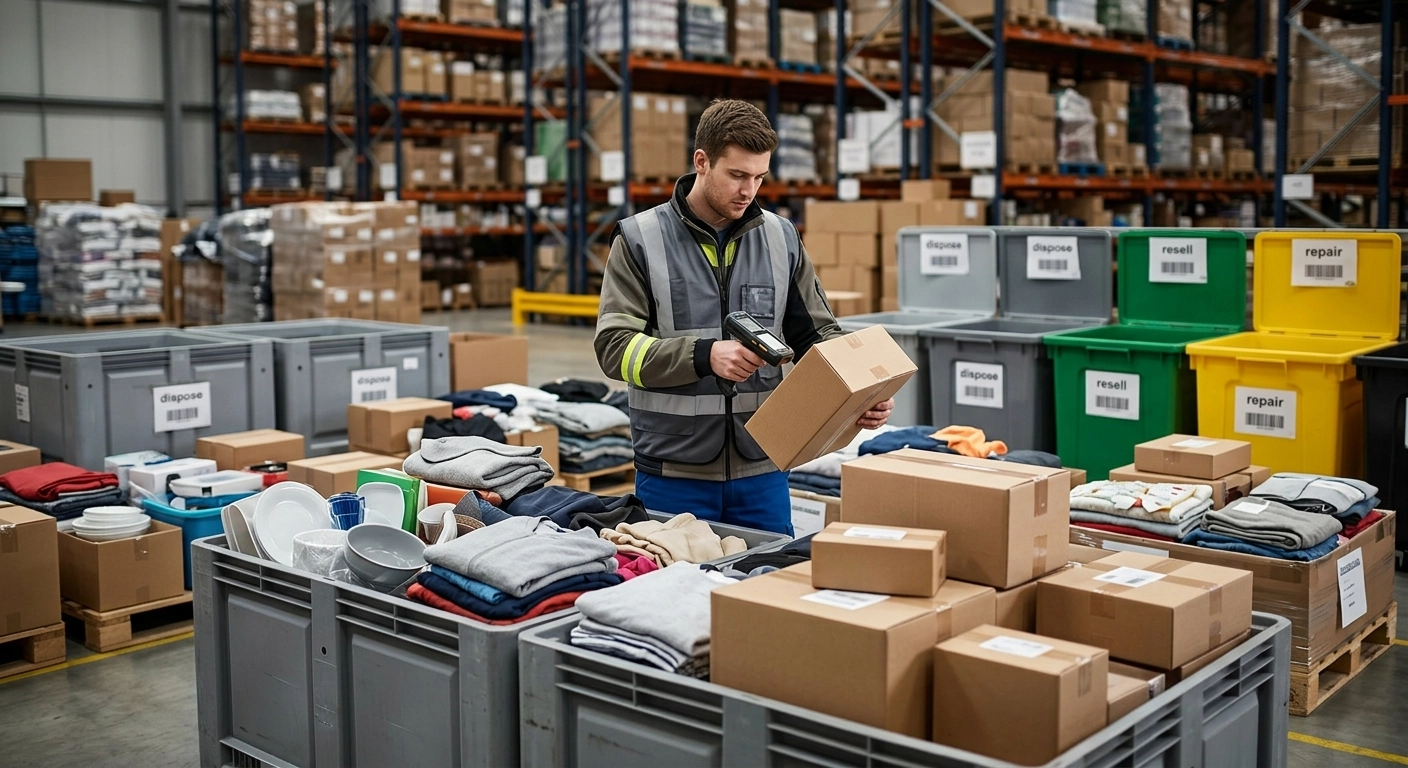
Sorting returns into clear dispositions is what makes the disposal step efficient and defensible.
- Restock: undamaged, unopened, and still current, returned to sellable inventory
- Refurbish or repackage: economically viable to restore, typically higher-value items
- Liquidate: sellable through secondary channels where your brand policy permits it
- Donate: usable, safe, and legally donatable, with the tax and liability position confirmed
- Recycle: not resellable but materially recoverable
- Dispose or destroy: unsafe, restricted, defective, or brand-sensitive product that must leave the market permanently
The categories that most often get misrouted are safety-related defects and branded product. Both belong in the last bucket even when they look perfectly saleable.
When Liquidation Is the Wrong Answer
Selling returns to a liquidator is fast and recovers some value, which makes it attractive for volume. It also means losing control of where the product ends up. Goods can reappear on marketplaces alongside your full-price listings, undercut your authorized retail partners, or reach a consumer who assumes they bought new product with a full warranty.
For defective or recalled items the calculation is not commercial at all. Liability follows the product, and a unit pulled for a safety reason that reaches a consumer through a liquidation channel remains your problem.
Categories That Should Always Be Disposed Of
Opened food, beverages, and supplements cannot be verified as safe once they leave your control. Cosmetics and personal care items that have been opened or used carry contamination risk. Products returned for a safety defect, and anything covered by an active recall, must not re-enter commerce. Devices holding customer data need their storage handled before anything else happens. Hygiene-restricted apparel and equipment typically cannot be resold under either regulation or retailer policy.
Build It Into a Schedule
Businesses that handle returns disposal well treat it as a recurring process rather than a periodic clearout. A defined cadence, whether monthly or quarterly, keeps volumes predictable, keeps consolidated shipments efficient, and prevents the emergency clearance that always costs more. Documenting quantities and dispositions each cycle also gives finance a clean basis for write-offs and gives you visibility into which SKUs are generating the returns in the first place.
Get Returns Disposal Handled Properly
At inventorydisposal.com, we handle unsellable customer returns across consumer goods, apparel, and general merchandise, with scheduled collection, appropriate routing of each category, and a Certificate of Disposal on every project. Contact our team today for a fast quote and compliant returns disposal across all 50 states.