A sprinkler head lets go on a Friday night. A roof seam opens during a storm. A freezer compressor fails over a long weekend. However it happens, you arrive to find inventory that was worth money on Thursday and is now a disposal project with a clock attached.
This guide covers what to do in the first days, why the sequence matters for your insurance claim, and how damaged stock is actually processed.
The First 48 Hours Decide the Cost
Wet fiber packaging supports mold growth quickly, and once mold establishes itself it does not stay where it started. Separating wet material from dry material early is the single highest-value action available, because it protects inventory that is still sellable from becoming part of the loss.
The same applies to smoke and odor. Smoke-affected stock is rarely confined to the area that burned, and product stored near an affected zone absorbs odor that no amount of airing out removes. Isolating it early limits how far the problem spreads.
Common Incidents and What They Do
Sprinkler Discharge and Water Intrusion
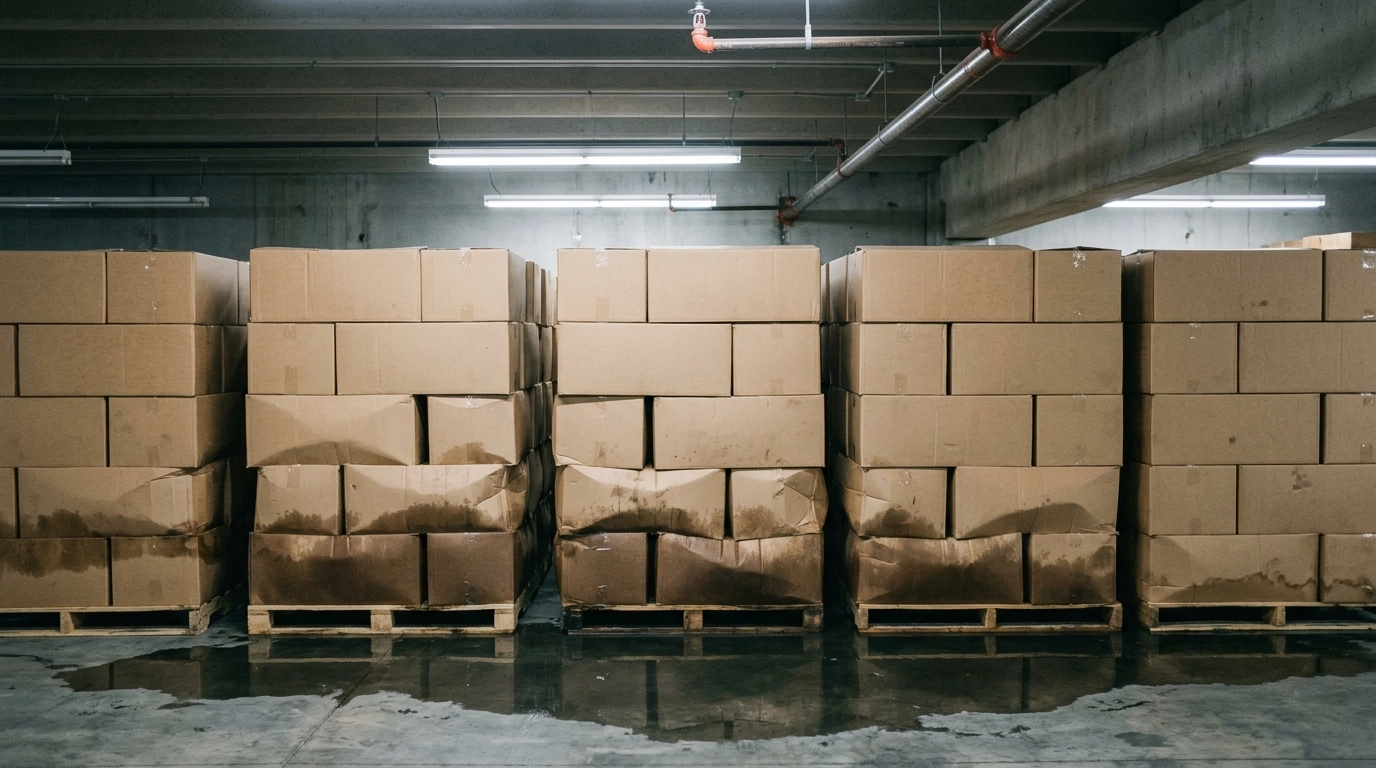
Cartons wick water upward, so damage is frequently worse than it looks from the top of a pallet. Stacked loads collapse as the lower cartons soften, and the product inside is often undamaged while the packaging is unsellable.
Roof Leaks and Storm Damage
Slower and easier to underestimate. Product can sit damp for weeks before anyone notices, which usually means mold rather than water is the problem by the time it is found.
Refrigeration and Freezer Failure
A temperature excursion puts an entire load outside its validated range, and there is no test that recovers the assurance afterward. For food and temperature-sensitive product the whole load is generally a loss regardless of how it looks.
Contamination From a Co-Stored Product
A leaking drum, a broken pallet of cleaning chemicals, or a pest treatment can contaminate stock stored nearby. The affected radius is usually wider than the visible spill.
Do Not Dispose of Anything Before the Adjuster Releases It
This is the mistake that costs the most and it is made under pressure, because the natural instinct is to clear the mess. Insurers normally need to inspect and document the loss before the material is disposed of, and product that has already gone can be very difficult to claim for.
Before anything moves: photograph the damage broadly and in detail, build an inventory list by SKU with quantities and values, record the date and cause, and keep the affected stock segregated and intact until the insurer confirms you may proceed. Then arrange disposal, and keep the record.
What the Insurer Will Want at the End
- An itemized inventory of what was damaged, by SKU and lot where applicable, with quantities and values
- Photographic evidence of the condition of the goods
- The cause and date of the incident
- Confirmation of the disposal method used
- Weights or unit counts recorded at the receiving facility
- A Certificate of Disposal identifying the product, quantity, date, location, and facility
That last document is what converts your claim from an assertion into a supported one. Without it you are asking an insurer to accept that inventory existed, was damaged, and was disposed of, on your word alone.
Why Damaged Stock Should Not Be Sold to a Salvage Buyer
Salvage buyers exist for exactly these situations and the offer arrives quickly. The problem is that water-damaged, smoke-affected, or temperature-abused product carries your brand into a resale channel while carrying a defect you cannot see.
For food, beverage, cosmetics, and anything with a safety dimension, this is a liability question rather than a pricing one. Many insurance policies also address disposition of damaged goods directly, so check the policy before accepting an offer.
How the Disposal Itself Is Handled
- Assessment of the load to separate genuinely unaffected stock from the loss
- Segregation by product type and by material stream
- Depackaging where product and packaging need to go different directions
- Recovery routed wherever the condition of the material still allows it
- Weights recorded by stream and reconciled against the inventory list
- A Certificate of Disposal issued for the project and referenced to the claim
Clear the Loss and Support the Claim
At inventorydisposal.com, damaged inventory projects are handled with rapid scheduling, segregation and appropriate routing of each stream, weights recorded throughout, and a Certificate of Disposal issued on every project.
Contact our team today for a fast quote and compliant damaged inventory disposal across all 50 states.