
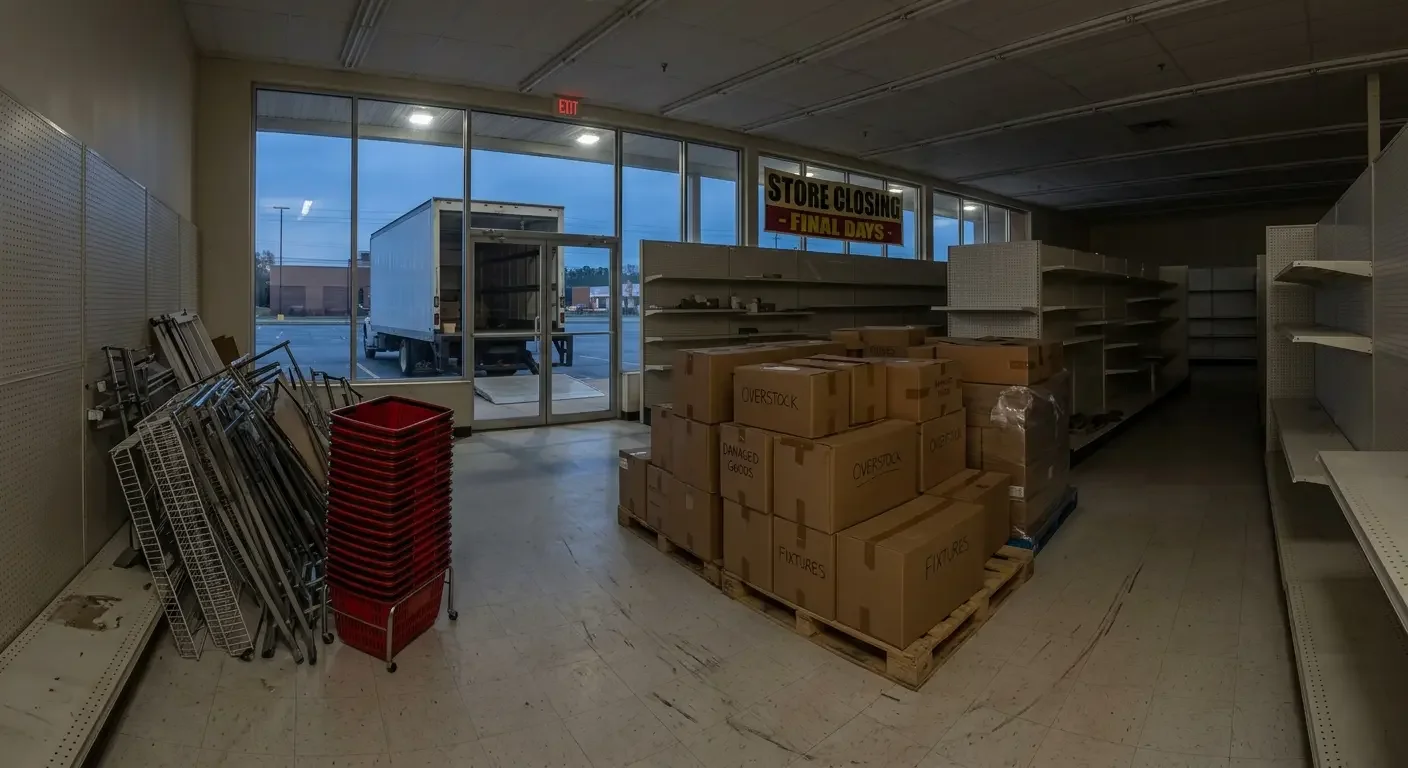
When a store closes, the sale gets attention. What remains after the sale gets much less. Every closing location leaves behind product that did not sell, damaged and returned goods in the backroom, regulated items that cannot be moved like ordinary merchandise, and fixtures, signage, and equipment that all have to go somewhere before the keys are handed back.
For a single location this is a hectic week. For a chain closing dozens of stores at once, it is a logistics project with a hard deadline set by the lease. This guide covers what has to be disposed of, how to sequence it, and how to keep the record clean.
What Is Left After the Closing Sale
- Unsold merchandise that liquidation buyers rejected
- Damaged, opened, and returned goods held in the backroom
- Expired food, beverages, supplements, and personal care products
- Regulated items such as aerosols, cleaning chemicals, batteries, and pharmacy stock
- Branded packaging, bags, gift cards, and printed materials
- Signage, displays, and fixtures
- Point-of-sale hardware and devices that may store data
Regulated Products Need Their Own Plan
The most common mistake in store closures is treating everything left in the building as general trash. Several categories found in retail stores are regulated when discarded.
Aerosols and Flammables
Paint, cleaners, fragrances, and spray products may be hazardous waste when discarded in bulk. Aerosol cans can often be managed as universal waste.
Batteries and Electronics
Batteries, small electronics, and devices with batteries need separate handling. Many states also have electronics disposal rules.
Pharmacy Stock
Pharmacy inventory, especially controlled substances, must be handled through the proper channels. Controlled substances move through an authorized DEA registrant, not a general disposal vendor.
Pesticides and Lawn Care Products
Garden centers and hardware stores often hold pesticides and fertilizers that require specific handling.
Sequence the Work
Store closures go faster when disposal is planned before the closing sale ends.
- Identify regulated products early and pull them from the sales floor if they will not be sold
- Arrange disposal capacity before the last day of trading
- Separate regulated items from general merchandise in the backroom
- Count remaining inventory by SKU before it leaves the building
- Schedule fixture and equipment removal after the product is gone
- Leave enough time to meet the lease handback date
Multi-Location Closures
When a chain closes many locations at once, consistency matters. Every store should follow the same sorting and counting process, so that the disposal records can be combined and reconciled against the final inventory.
Disposal close to each location is usually more efficient than consolidating product into a central warehouse, especially for regulated items that may have transport restrictions.
Brand Protection After the Doors Close
Leftover merchandise from a closing store can resurface for years. Products sold to liquidators appear on marketplaces, and products thrown into dumpsters can be recovered and resold. Branded items such as shopping bags, gift cards, and uniforms should be disposed of rather than left behind or sold.
Data on Store Devices
Point-of-sale terminals, handheld scanners, and back-office computers may store customer and payment data. These devices should be wiped or physically disposed of with a record that shows how the data was handled.
Documentation to Keep
- Inventory counts by SKU before disposal
- Separate records for regulated product, including any hazardous waste or universal waste shipping documents
- Records of devices disposed of and how data was handled
- A Certificate of Disposal for each location or for the project as a whole
These records support inventory write-offs, insurance claims, and any questions from landlords, lenders, or auditors after the closure.
Close Stores Without Loose Ends
At inventorydisposal.com, store closure projects are handled with on-site sorting, separate routing for regulated items, consistent records across every location, and a Certificate of Disposal issued on every project.
Contact our team today for a fast quote and compliant retail inventory disposal across all 50 states.