
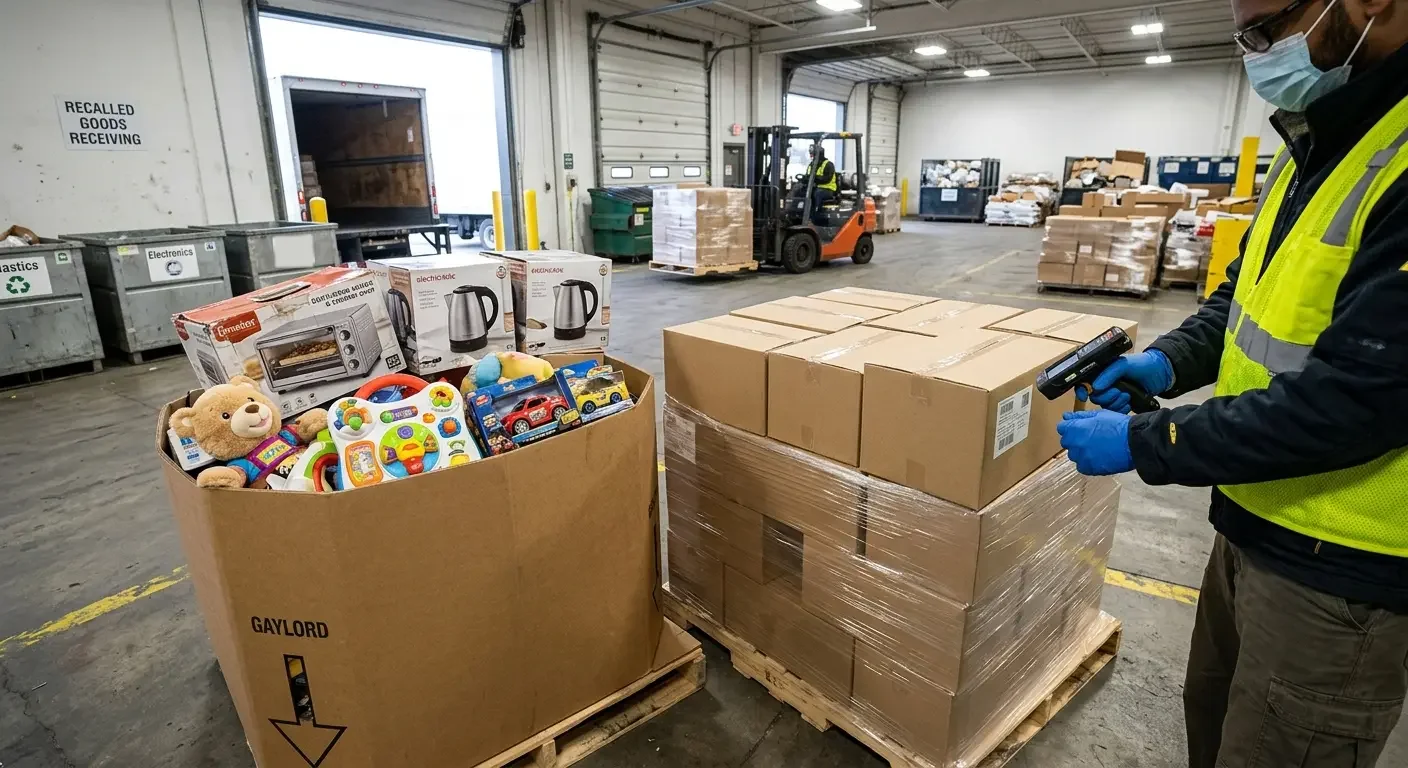
When a product is recalled, attention goes to the announcement, the customer notices, and the media coverage. The work that actually closes the recall happens later and out of view: collecting recovered product from warehouses, retailers, and customers, counting it, and disposing of it in a way that can be verified.
That last step is where many recalls stall. This guide covers how recalled inventory is handled, why reconciliation matters, and what disposal records need to show.
Who Oversees Recalls
Recalls in the United States are overseen by different agencies depending on the product:
- The Consumer Product Safety Commission for most consumer products
- The Food and Drug Administration for food, drugs, cosmetics, supplements, and medical devices
- The USDA Food Safety and Inspection Service for meat, poultry, and certain egg products
- The National Highway Traffic Safety Administration for vehicles and vehicle equipment
Each agency has its own process, but they share one expectation: recovered product must be removed from commerce permanently, and the company must be able to show what happened to it.
Reconciliation Comes Before Disposal
A recall is closed by accounting for the product. That means showing how much was produced and distributed, how much was recovered, and how much was disposed of. The disposal record is one part of that reconciliation, and it has to be specific enough to match the recall.
If the recall covers specific lots, serial numbers, or date codes, the disposal record should list them. A general statement that a truckload of product was disposed of cannot be matched to the recall and will not help close it.
Where Recalled Product Comes From
- Product held in your own warehouses and distribution centers
- Inventory recovered from retailers and distributors
- Units returned by consumers through retail or mail-back programs
- Product held by third-party logistics providers and fulfillment centers
- Returns that came back through the regular returns stream before the recall was announced
That last source is a common gap. If the returns team does not know about the recall, recalled units can be graded and restocked. Make sure recall instructions reach every point where product enters your inventory.
Disposal Methods Depend on the Product
Food and Beverage
Recalled food is depackaged so that no intact retail unit survives. Food content is routed to appropriate outlets depending on the reason for the recall, and packaging is handled separately.
Consumer Products
Products recalled for safety reasons are disposed of so that they cannot be used again. Where materials can be recovered, such as metals or plastics, recovery happens after the product has been rendered unusable.
Electronics and Battery-Powered Products
Batteries are removed and managed separately, particularly lithium batteries that pose a fire risk during processing. Electronic components are then routed for recycling.
Children’s Products
Recalled children’s products, such as cribs, car seats, and toys, must never be donated or resold. Disposal should make them unusable.
Never Donate or Liquidate Recalled Product
It is illegal to sell a product that is the subject of a CPSC recall, and recalled items in other categories are equally off-limits. Liquidators, donation programs, and secondary sellers do not remove recalled products from circulation. They move them into channels where they are harder to track, and the brand remains responsible.
Documentation to Keep
- Quantities disposed of by lot, serial number, or date code
- The date, location, and facility where disposal took place
- The disposal method for each product stream
- Records of witnessed disposal where the agency or the company requested it
- A Certificate of Disposal that references the recall
Keep the disposal records with the recall file. When the agency reviews whether the recall can be closed, that is where it will look.
Close Out Your Recall
At inventorydisposal.com, recalled product projects are handled with lot-level receiving, disposal methods matched to each product type, and a Certificate of Disposal issued on every project.
Contact our team today for a fast quote and compliant recalled product disposal across all 50 states.