
Cosmetics and personal care products look like low-risk inventory. They are small, packaged, and familiar. Yet when a brand or retailer needs to dispose of thousands of units of expired skincare, discontinued fragrances, or rejected shipments of aerosols, the project turns out to be more complicated than expected.
Many of these products are regulated as hazardous waste when they are discarded, and nearly all of them carry a brand that has to be protected after they leave your hands. This guide covers how to dispose of cosmetics and personal care inventory compliantly.
Why Cosmetics Inventory Becomes Unsellable
- Products past their expiration date or period after opening
- Discontinued shades, scents, and formulations
- Packaging and labeling changes, including updated ingredient declarations
- Retailer returns, rejected shipments, and chargebacks
- Damaged, leaking, or tampered units
- Recalls and quality holds
- Testers, samples, and gift-with-purchase items left after a promotion
Some Cosmetics Are Hazardous Waste When Discarded
This is the part that surprises most brands. Products that are perfectly safe to sell can become regulated hazardous waste when a business discards them in bulk.
Fragrances and Alcohol-Based Products
Perfumes, colognes, body sprays, and many toners and hand sanitizers contain enough alcohol to be ignitable. When discarded, they can carry the D001 ignitability code.
Aerosols
Hairspray, dry shampoo, deodorant, and spray sunscreen use flammable propellants. Aerosol cans can be managed as universal waste in many states, which is simpler than full hazardous waste management.
Nail Products
Nail polish and removers often contain flammable solvents such as acetone or ethyl acetate.
Other Formulations
Some products contain ingredients that can make the waste toxic or corrosive, such as certain hair treatments and chemical exfoliants.
The volume matters. A business discarding large quantities of flammable product in a single month can change its generator status. Sort the inventory by category before scheduling disposal.
Depackaging Separates Product From Packaging
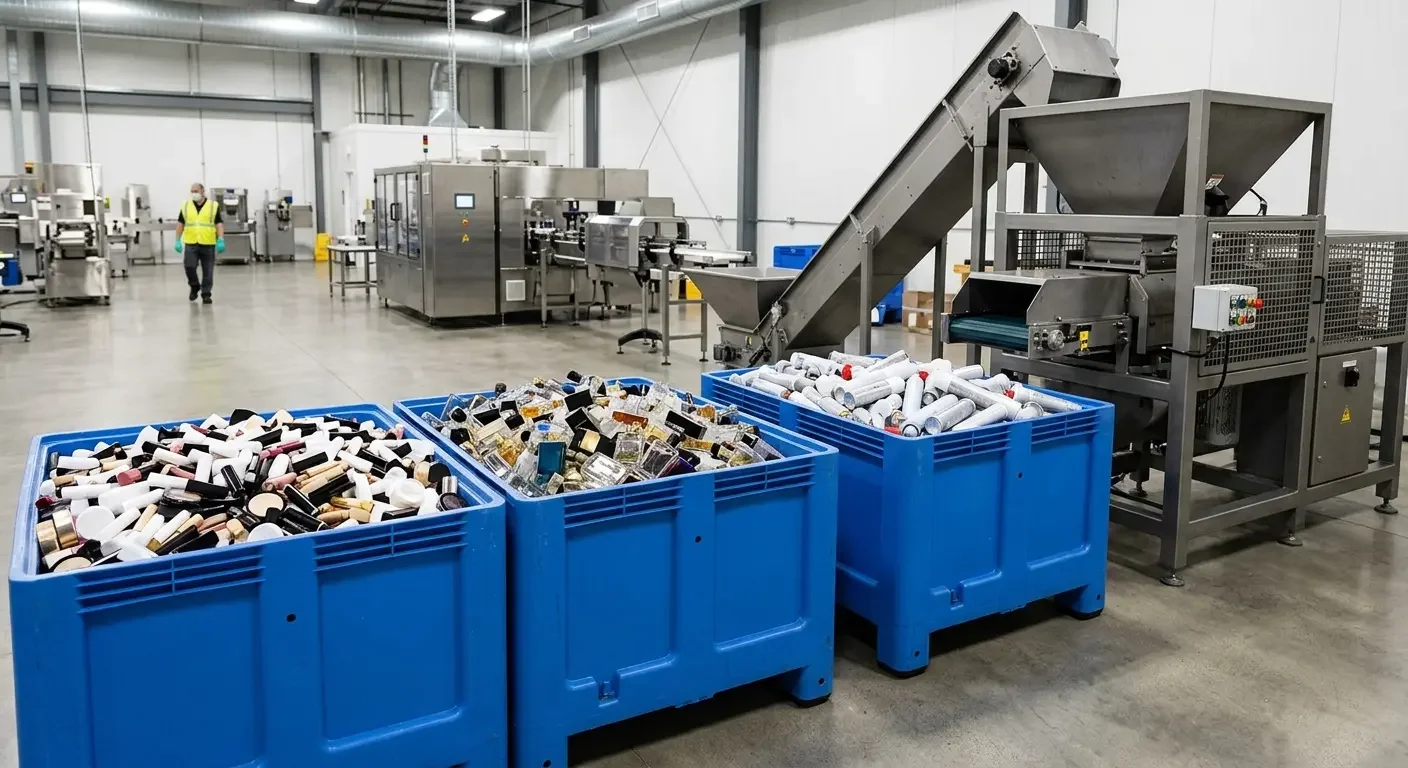
Most cosmetics disposal projects rely on depackaging. Product is separated from bottles, jars, tubes, and compacts at an industrial scale, so that each stream can be routed appropriately.
- Liquid and cream contents are routed to treatment, fuel blending, or other appropriate outlets
- Glass, plastic, and metal containers are separated for recycling where possible
- Branded cartons and labels are disposed of so that they cannot be reused
- Aerosol cans are managed separately, often as universal waste
Sending sealed retail units to a landfill leaves intact, saleable-looking product where it can be recovered and resold.
Why Donation and Liquidation Are Risky
Donation is appropriate for some unexpired, undamaged personal care products. It is not appropriate for expired, recalled, damaged, or reformulated items. Liquidated cosmetics often reappear on online marketplaces under your brand, where customers have no way to know the product is expired or was pulled from sale.
If a customer reacts to a product sold this way, the complaint and the review come back to the brand.
Testers and Samples
Testers and samples are frequently overlooked. They are often opened, partially used, and labeled “not for resale,” but they still carry the brand. Collect them with the rest of the inventory and dispose of them through the same process.
Documentation to Keep
The disposal record should identify products by SKU and quantity, describe how each stream was handled, list any hazardous waste manifests or universal waste shipping records, and name the facility and date. Keep it with your inventory adjustment and any recall file.
Dispose of Cosmetics Inventory the Right Way
At inventorydisposal.com, cosmetics and personal care projects are handled with category sorting, depackaging, appropriate routing for flammable and aerosol products, and a Certificate of Disposal issued on every project.
Contact our team today for a fast quote and compliant cosmetics disposal across all 50 states.